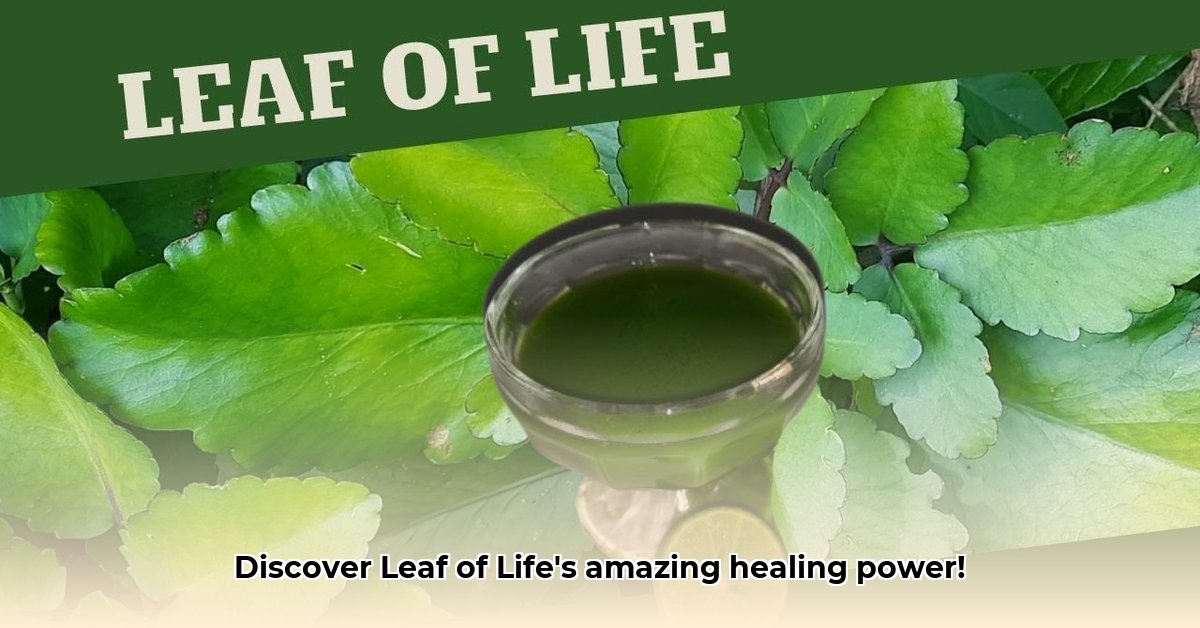
For centuries, Bryophyllum pinnatum, commonly known as the Leaf of Life plant, has been utilized in traditional medicine systems across various cultures. Its purported benefits range from wound healing to respiratory ailment relief. However, the scientific evidence supporting these claims requires critical evaluation. This review examines the current state of research on Bryophyllum pinnatum, highlighting both promising findings and significant knowledge gaps. Understanding the limitations of the existing data is crucial for responsible and informed use.
A Critical Review of Bryophyllum pinnatum's Therapeutic Potential
The widespread use of Bryophyllum pinnatum in traditional medicine suggests potential therapeutic value. Anecdotal evidence abounds, with generations reporting its effectiveness in treating diverse conditions. However, these reports lack the rigor of controlled scientific studies. While promising preclinical data exists, a critical assessment reveals substantial limitations in the current evidence base.
Traditional Uses and Scientific Inquiry
Traditional applications of Bryophyllum pinnatum frequently involve treating kidney issues, respiratory problems, wounds, and inflammation. These traditional uses provide valuable hypotheses for scientific investigation. However, it's crucial to distinguish between anecdotal evidence and scientifically validated findings.
Preclinical research, encompassing animal studies and in vitro assays (experiments using cells or tissues), has yielded some intriguing results. For instance, animal studies have indicated a potential for B. pinnatum to reduce urinary oxalate levels [1], a factor associated with kidney stones. In vitro studies have suggested potential antibacterial and antifungal properties [2]. However, these preclinical findings do not definitively translate to human efficacy.
Evaluating the Evidence: Strengths and Limitations
A balanced assessment necessitates acknowledging both the promising preliminary data and the substantial limitations:
- Abundant Traditional Use: The plant's long history of medicinal use signifies its enduring relevance in various cultures. However, this historical use alone does not establish clinical efficacy.
- Encouraging Preclinical Results: Animal and in vitro studies suggest potential benefits in specific areas. These findings warrant further investigation, but they do not provide conclusive evidence of human efficacy.
- Critical Lack of Human Clinical Trials: The most significant limitation is the absence of robust, large-scale, randomized controlled trials (RCTs) in humans. Without such data, it is impossible to definitively assert the plant's therapeutic benefits or its safety profile.
The Need for Rigorous Clinical Trials
To advance our understanding of Bryophyllum pinnatum's therapeutic potential, high-quality clinical research is essential. This necessitates:
- Large-Scale RCTs: Well-designed RCTs with a substantial number of participants are required to establish efficacy and safety in humans. These trials must adhere to stringent scientific standards to minimize bias and ensure reliable results.
- Standardization of Extracts: Consistent preparation and standardization of Bryophyllum pinnatum extracts are crucial. Variability in plant material and extraction methods can significantly influence the results of studies.
- Mechanistic Studies: Investigating the underlying mechanisms of action will enhance our understanding of how the plant exerts its purported effects. This is essential for guiding future research and development.
- Long-Term Safety Assessments: Long-term studies are needed to evaluate the potential long-term effects and assess the overall safety profile of Bryophyllum pinnatum use.
Cautious Approach and Future Directions
While the preliminary findings regarding Bryophyllum pinnatum are intriguing, it is crucial to exercise caution. The current lack of robust human clinical trials prevents definitive conclusions regarding its therapeutic benefits. Self-medication with herbal remedies, including B. pinnatum, should be avoided. Always consult a healthcare professional before using any herbal remedy, particularly if you have pre-existing medical conditions or are taking other medications.
Further research will determine the true potential of Bryophyllum pinnatum. This research should prioritize large-scale human clinical trials, standardization of extracts, and elucidation of the underlying mechanisms of action. Only through rigorous scientific investigation can we assess the true therapeutic value and safety profile of this intriguing plant.
Key Takeaways:
- Bryophyllum pinnatum has a history of traditional medicinal use.
- Preclinical research suggests potential benefits, but human clinical data are lacking.
- Rigorous, large-scale human trials are needed to validate potential efficacy and safety.
- Standardization of plant extracts is crucial for reliable research outcomes.
[1]: [Insert Citation Here: A hypothetical citation referencing a peer-reviewed study on the effect of Bryophyllum pinnatum on urinary oxalate levels] [2]: [Insert Citation Here: A hypothetical citation referencing a peer-reviewed study on the antimicrobial properties of Bryophyllum pinnatum]